
Prove who you are without exposing what you do.
Relay confirms age, human presence, and other checks through a simple, drop-in experience that keeps what you do private.

Use our lightweight widget or integrate at the infrastructure layer with our proxy integration method. Configure it once and apply it consistently across your platform.
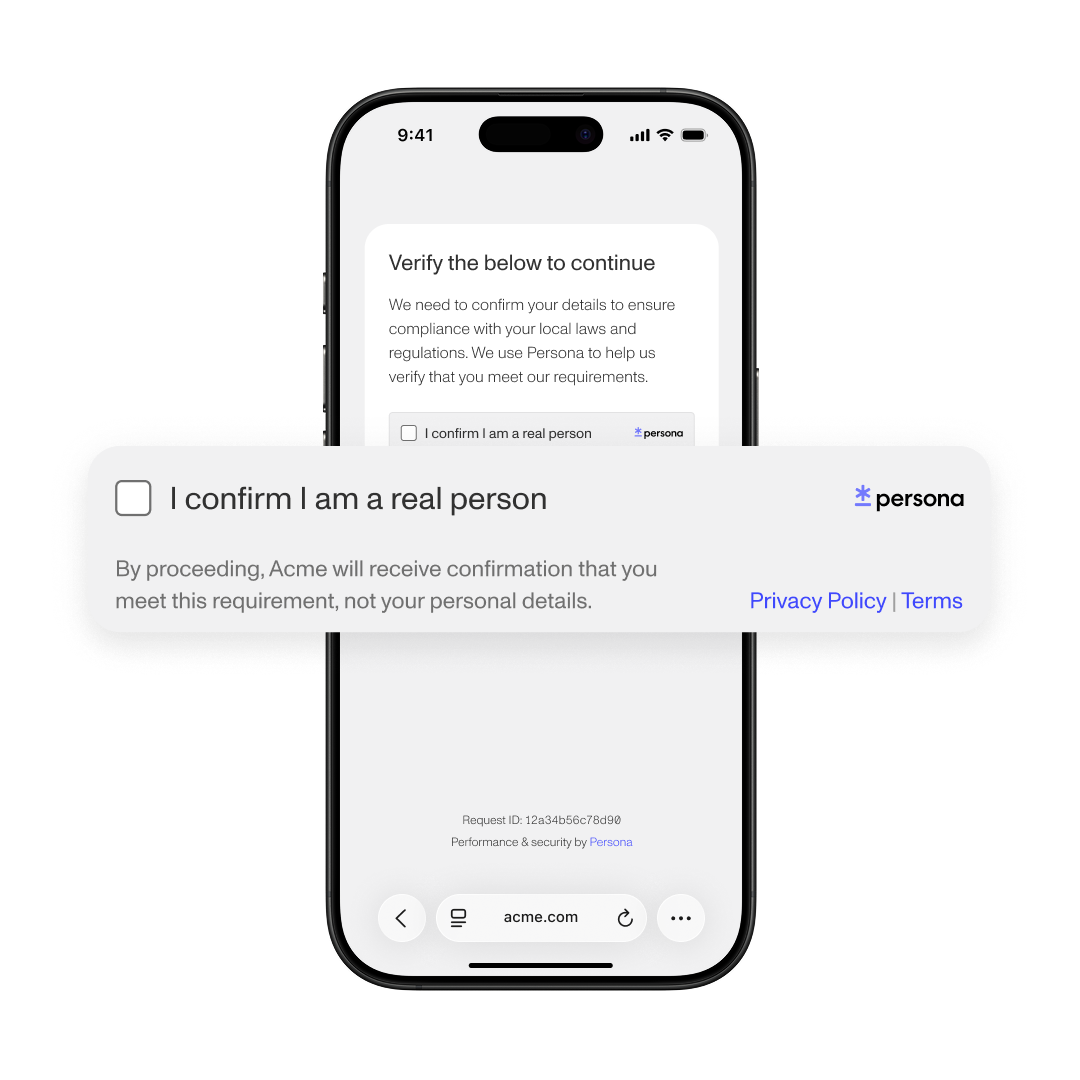
Choose a claim type to verify — like age or humanness. Relay determines which information to collect based on jurisdiction-specific regulations and best practices, so users only share what's necessary.
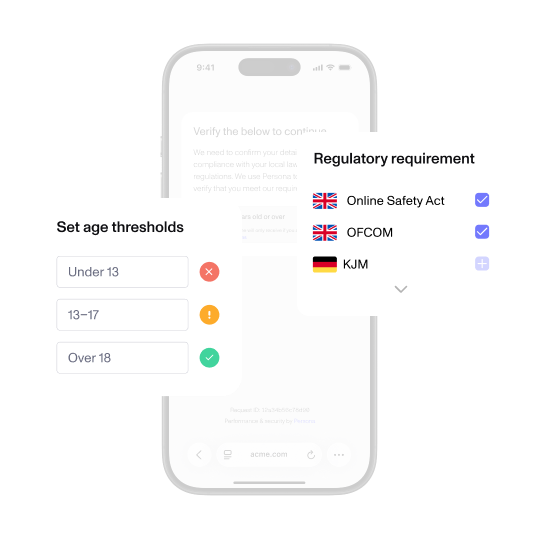
Persona verifies the user’s information and your system only receives the result. Any sensitive personal information remains private and completely separate from website activity.
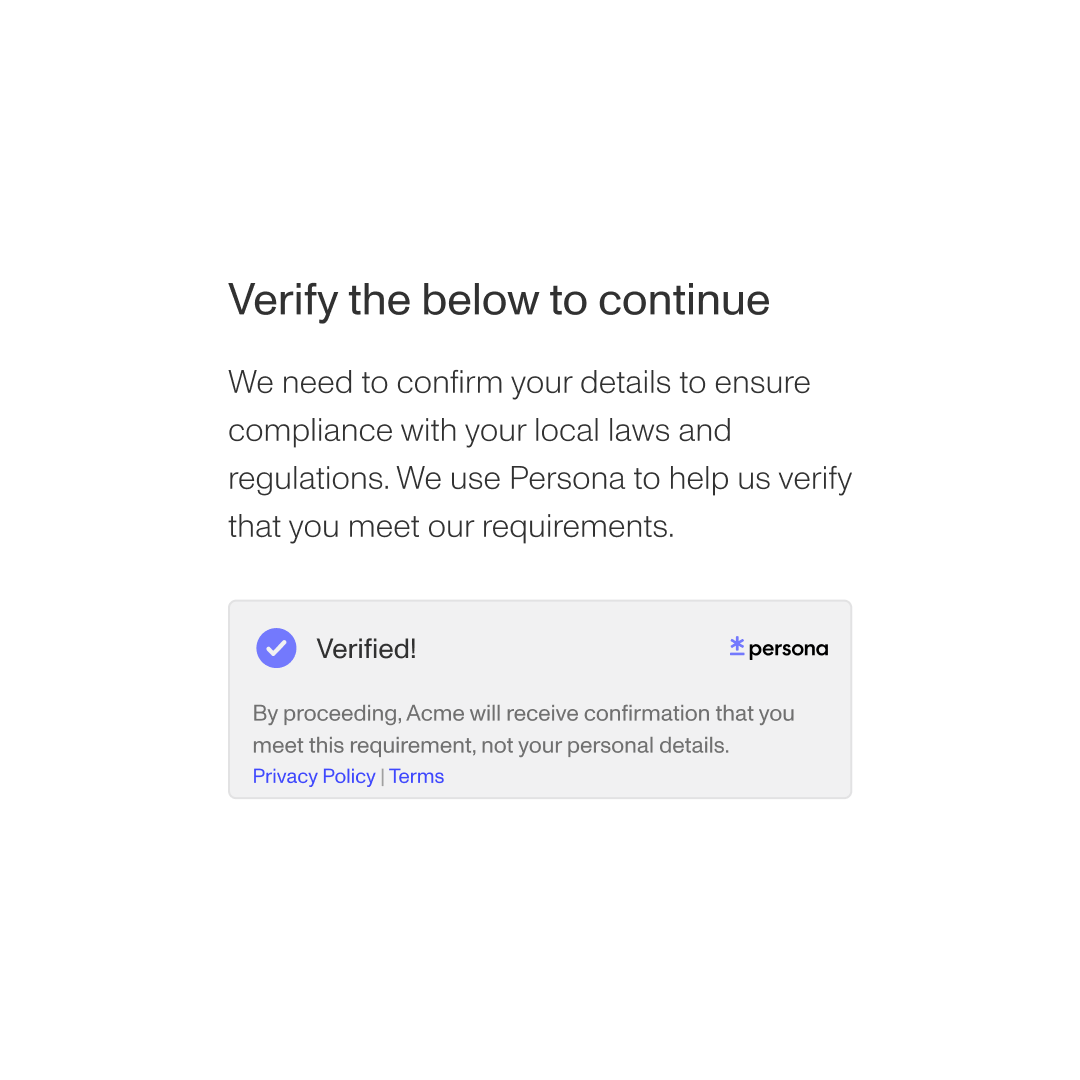

Humanness
Distinguish real users from automated systems before granting access to sensitive features.

Age assurance
Gate access to regulated or age-restricted experiences using verification designed to support regulatory requirements.

Delegated KYC
Run identity and compliance checks while keeping sensitive user data out of your systems.
Built to keep identity and activity separate
Relay verifies only what's needed to confirm what you need to know (e.g. age eligibility or human presence) according to the level of assurance required. Users only share what’s necessary to answer if they’re eligible.
Verifications through Relay run independently from your site. This means Persona doesn't see what the user is trying to access or do, and your system only receives the result — not the underlying personal data.
This separation is intentional; we use cryptographic protocols to ensure no single party, including Persona, can reconstruct the relationship between a person's information and the website requesting verification.
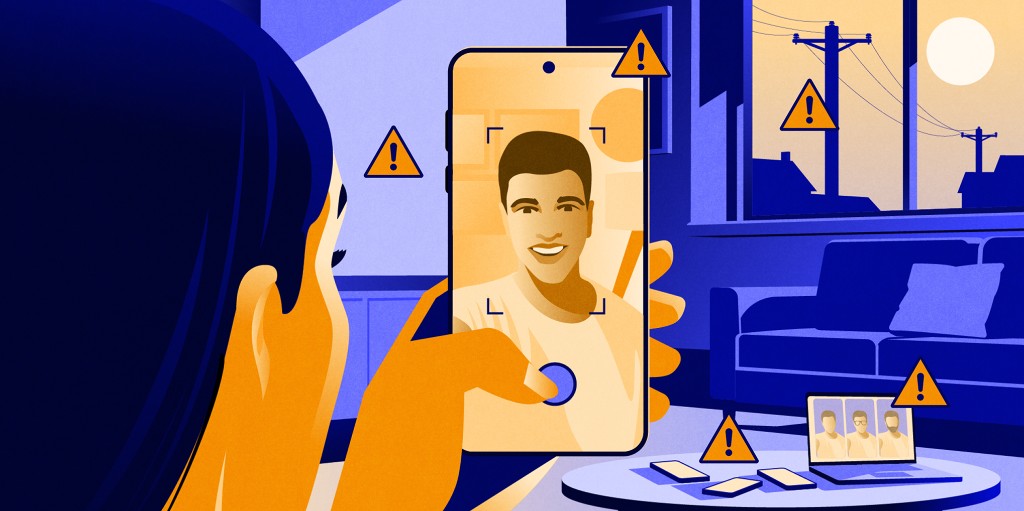
From deepfakes to synthetic faces: detect more AI-based face spoofs with Relay
The world is moving beyond self-attestation as the primary age assurance method and jurisdictions across the globe have varying requirements.
Relay translates regulatory guidance into actionable age requirements across regions and supports your broader compliance strategy.
Under the UK Online Safety Act (18+), Ofcom outlines expectations for “highly effective” age assurance for certain services. Depending on your use case, supported methods may include:
- Document-based verification with live selfie matching
- Facial age estimation


Frequently asked questions
How does Relay protect user privacy? Toggle description visibility
Relay is designed so identity verification and user activity stay separate. Persona confirms what needs to be true, without knowing what website or action the verification is for. And your system receives only the result, not identity details. These two sides are kept independent by design, so who someone is and what they’re doing can’t be tied together.
What determines the verification experience users see? Toggle description visibility
The verification experience is determined on claim type you set when integrating Relay. The claim type includes what you need to confirm (for example, human presence or age 18+) and the level of assurance required. From there, when a user encounters Relay, it generates the appropriate verification step and methods to meet that level of assurance for the user’s claim, informed by regulatory guidance and best practices. Users are only asked to provide what’s needed to confirm that requirement.
Does Relay support different regulatory requirements? Toggle description visibility
Relay is designed to support a range of use cases, some of which are shaped by regulatory expectations.
For age assurance, Relay provides predefined solutions informed by published regulatory guidance across jurisdictions. These help you apply appropriate thresholds and ensure the right verification methods are used, without building custom logic for each region.
For other use cases, like humanness, there may not be a single governing standard. In those cases, Relay adapts the verification to your requirements and risk tolerance, while still maintaining its privacy-preserving architecture.
Does using Relay make my organization compliant? Toggle description visibility
Relay is designed to help you implement eligibility checks in a way that aligns with evolving regulatory expectations.
For use cases like age assurance, Relay provides solutions informed by published regulatory guidance, so you can apply appropriate approaches without building everything from scratch. However, compliance depends on how your product is designed and operated overall. Each organization is responsible for determining how applicable laws and regulations apply to its services. Relay should be used as part of a broader compliance and risk strategy.
How is Relay different from traditional verification? Toggle description visibility
Traditional identity verification requires organizations to collect and handle identity information directly, often tying that verification to user activity within their product. Relay works differently. Persona runs and controls a separate verification step to confirm a specific requirement, like age or humanness. That verification happens independently from your website and does not receive context about what the user is doing. Your platform receives only the result, not the underlying identity details.
Can users reuse their verification? Toggle description visibility
In some cases, yes. Relay can support reusable claims, so users don’t have to repeat the same eligibility check at the same assurance level on return visits. This feature is currently in beta. Requirements for reuse vary by use case and regulatory jurisdiction, including how credentials are issued and used. Reach out to our team to learn more.

